Introduction: A Flower Worth More Than Gold
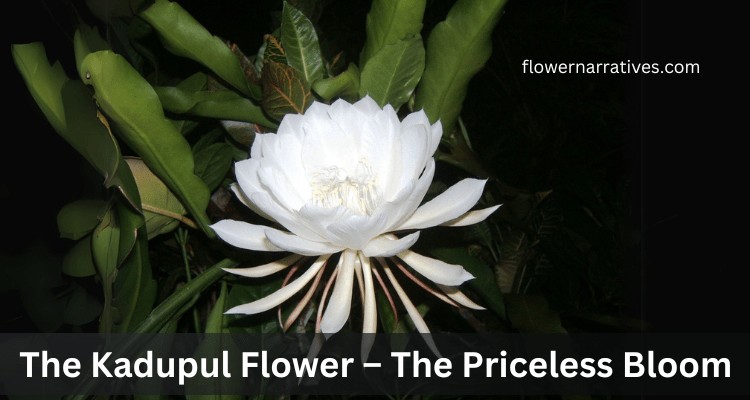
Rarest among the rare and most exotic among the exotic, Kadupul Flower (Epiphyllum oxypetalum) is a flower often known as the “Queen of the Night“. It opens its exquisite white petals only on some moonless night under the starry skies but wilts before dawn, virtually making its beauty unnoticed. Due to its short flowering duration and extreme rarity, it is said to be priceless, thereby putting this flower within the realm of the most mysterious scenes in the world.
Primarily found in Sri Lanka, India, and certain areas of the tropics, this flower has fascinated botanists, spiritualists, and flower lovers for centuries. Its sweet smell, the timing of its blooming, and the formidable meaning behind it have all been attributed to legend and wonder.
Join us as we take a look at the mysteries, symbolism, and significance inherent in this blooming gem.
Where is the Kadupul Flower Found?
The Kadupul Flower is a rare cactus-flowering plant that blooms at night and thrives mostly in warm and humid environments. It is indigenous to:
🌿 Sri Lanka
Considered a sacred flower, deeply tied to local legends and spiritual beliefs.
🌿 India & Southeast Asia
Found in tropical forests and gardens, where its rare blooming is much celebrated.
🌿 Some Parts of South America & the US
Though not as common, certain regions with warm climates have reported sightings of the Kadupul Flower.
Unlike other flowers, it doesn’t grow on land; it grows on tree trunks or any other surface and sources its moisture from the air.
What Is So Special About The Kadupul Flower?
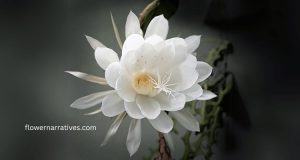
This ephemeral nature is what makes the Kadupul truly unique. The flower opens at night, rarely before 10 PM, and lies wilting away before dawn, leaving no trace of its own existence.
🌙 Blooms Once in a While
Other flowers bloom regularly, almost every year or two. The Kadupul, however, is blithely unpredictable. At times, it blooms only once a year.
🌙 Short-Lived Beauty
The flower has a life span of about six hours. Most of the time, it can’t even be appreciated by people lucky enough to see it.
🌙 Strong Fragrance
Madhumalati intoxicates all with an incredibly fragrant jasmine scent that develops sweetly and suffocates as the bloom wilts.
🌙 Can’t Be Bought or Sold
The flower withers pretty much right after blooming, which makes it impossible to harvest, making it one of the rarest yet most coveted flowers in the world.
The absence of longevity has added an element of fable to the Kadupul Flower–an avatar for beauty, purity, and the transience of life.
Symbolism & Meaning of the Kadupul Flower
This flower is not rare but is one within itself, and is imbued with spiritual and cultural meaning. It has been associated with Buddhism, purity, and the transitory nature of life.
🌸 Impermanence & Beauty
Truths in life are transitory- the Kadupul Flower caused the soul to remember that.
🌸 Sacred and Spiritual Energy
The Kadupul is said to bring blessings to the heavens whenever it blooms in the Buddhist way of life.
🌸 Ultimate Unattainable Perfection
Inability to cut or own is all that makes the flower denote the most ultimate-ready beauty completely out of reach and available nowhere.
🌸 Good Luck & Wealth
In certain cultures, seeing a Kadupul flower is one of the signs said to promise good fortune and divine blessings.
Why is the Kadupul Flower Considered Priceless?
Unlike the other precious flowers, like the Juliet Rose or the Ghost Orchid, the Kadupul Flower cannot be priced, not because it is not worthy, but because it cannot be sold or possessed.
💎 Extremely Rare
It blooms just for a few hours at night and disappears at dawn, making it almost impossible to collect.
💎 Impossible to Cut and Preserve
If plucked, the flower loses its freshness in just a few minutes and is unusable for bouquets or sales.
💎 Has Cultural & Deep Spiritual Significance
The flower, known more in Sri Lankan communities and the Buddhist culture, is really considered sacred, and thus adds to this priceless reputation.
These are some reasons that have made the Kadupul Flower the so-called most expensive flower in the world, with no price tag being attached to it.
Can You Grow a Kadupul Flower at Home?
Yes! The Kadupul flower is indeed rare, but can be cultivated by growing it under conditions like in warm and humid climates.
To grow a Kadupul Flower, you need:
-A warm environment (20-30°C)
-A host tree or a pot with well-draining soil
-Minimum direct sunlight but High humidity
-Patience, as it may bloom only once a year-or even less!
It is possible to grow this plant, but the blossoming is still an unpredictable, magical experience.
FAQs About the Kadupul Flower:
1. Why is the Kadupul Flower referred to as the ‘Queen of the Night’?
The Kadupul Flower is referred to as the ‘Queen of the Night’ because it blooms during the night and dies before dawn, giving rise to a fairly rare and magical sight.
2. Where can we find this Kadupul flower?
Kadupul Flower is found mostly in Sri Lanka and India, as well as Southeast Asia, and even some parts of South America. This flower best thrives under the humid, tropical conditions, usually growing as an epiphyte on tree trunks.
3. What time does the Kadupul Flower bloom?
The Kadupul Flower occasionally and irregularly blooms. It sometimes gives out a flower just once in a year or so.
4. What does the Kadupul Flower signify?
It stands for impermanence, beauty, spiritual energy, and good fortune. Since it cannot be bought or owned, it shows unattainable perfection as well.
5. Why is the Kadupul Flower considered priceless?
The Kadupul Flower is priceless as it cannot be sold, as its demand per unit is very high, but once plucked, it wilts very soon, perhaps in a few hours, making it impossible to preserve and to store or market it.
Final Words
More than a flower, the Kadupul Flower is a creature of mystery, rarity, and fleeting beauty. With its delicate white petals, heavenly fragrance, and short-lived bloom, it continues to excite and inspire those fortunate enough to behold it.
At Flower Narratives, we celebrate the most extraordinary flowers of nature and the incredible stories behind them – for every blossom has a tale.