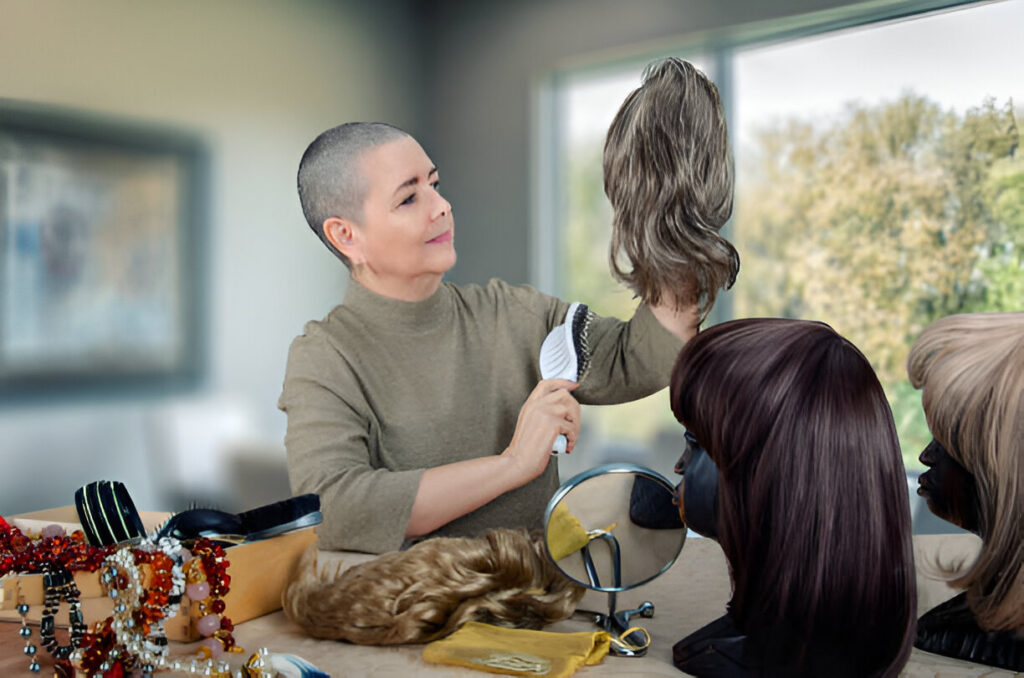
Wigs occupy a distinctive position at the intersection of aesthetics, identity, and practical utility. Beyond their historical and theatrical roots, modern wigs function as instruments of self-presentation—enabling rapid style transformation, offering solutions for medical hair loss, protecting natural hair, and streamlining daily grooming. This article presents an authoritative guide to selecting, wearing, and maintaining wigs, and illustrates their practical application through two contemporary styles: the kinky curly half wig, showcased in a lifestyle scenario, and later, the short bob glueless wig, examined in a professional context.
Wigs as tools of expression and utility
A wig is simultaneously an aesthetic choice and a technical product. Its value derives from how well it aligns with an individual’s aims: to experiment with a new look without commitment; to protect natural hair from repeated heat and chemical exposure; to restore a conventional appearance after medical hair loss; or to adopt a reliable, low-maintenance style for professional demands. Each motive implies distinct requirements for material, cap construction, and daily care. Appreciating this range clarifies why certain constructions—full lace, lace front, glueless caps, and half wigs—have become prevalent, and why texture and material choices materially affect longevity and realism.
Selecting the appropriate material and construction
Material choice is foundational. Human hair wigs deliver the closest parity with natural hair in movement, texture, and heat tolerance; they are the preferred option when longevity and styling versatility are priorities. High-quality synthetic fibers emulate specific textures and retain set styles with minimal effort; modern synthetics can be remarkably convincing, especially when engineered to replicate particular curl patterns or color depths. Cap construction determines comfort, naturalism, and method of wear: lace front caps create a realistic hairline, glueless caps allow secure wear without adhesive, and half wigs offer expedited installation while preserving visibility of the wearer’s natural hairline. For extended daily wear, attention to cap ventilation and accurate sizing prevents discomfort and reduces slippage.
Practical criteria for purchase
When evaluating a purchase, consider five objective criteria:
- Purpose: Define whether the wig will serve primarily for protection, aesthetics, medical need, or performance.
- Material resilience: Assess whether the fiber tolerates heat, chemical processing, and repeated manipulation.
- Cap ergonomics: Verify adjustable straps, combs, and the presence or absence of adhesives; for sensitive scalps, glueless systems are preferable.
- Texture and color fidelity: Select textures that either complement or deliberately contrast with natural hair; color should be tested against the wearer’s skin tone under natural light.
- Maintenance commitment: Ensure the required care routine (washing frequency, styling tools, storage) fits the wearer’s lifestyle.
Scenario: the kinky curly half wig in everyday life
Consider a practical application in which a textured half wig provides both stylistic effect and hair protection. A woman in her early thirties, balancing freelance responsibilities and social engagements, selects a kinky curly half wig to introduce sustained volume and defined curl structure to her existing hair while minimizing manipulation of the frontal hairline. The half wig affixes at the crown and back, leaving the frontal hairline visible and enabling seamless blending with natural edges. For daytime wear—coffee meetings or neighborhood errands—this construction affords an immediate, natural appearance with minimal styling: gentle finger separation and a light leave-in moisturizer suffice to define curls. For evening or formal events, the same unit can be elevated by enhancing curl definition with curl cream and by incorporating accessories such as hairpins or decorative combs.
Operational advantages of this approach include reduced daily heat exposure to natural hair, rapid interchangeability between styles, and decreased installation time relative to full wigs. Care protocols emphasize detangling from ends to roots with a wide-tooth comb, periodic deep-conditioning for human-hair variants, and finger detangling for synthetic curly fibers to reduce frizz. When selecting a half wig for textured outcomes, prioritize cap stability and a color match to the wearer’s natural roots to ensure a harmonious finish.
Scenario: the short bob glueless wig for professional settings
The short bob glueless wig exemplifies a different set of priorities—namely, a polished silhouette, minimal maintenance, and secure wear without adhesive. For a professional who travels frequently and values a refined, consistent appearance, this style offers a clean, structured aesthetic that conveys competence and attention to grooming. The glueless cap provides secure fastening through internal straps, combs, and silicone or elastic grips, allowing rapid donning and doffing in transient environments such as hotel rooms or backstage areas.
Maintenance is straightforward: periodic steaming or low-temperature pressing restores the bob’s contour, and anti-frizz sprays designed for wig fibers preserve a smooth finish. For human-hair constructions, low-heat styling and heat protectant agents are recommended. The short bob’s compact profile reduces tangling during transit and simplifies storage on padded stands. For those seeking an exacting professional image, the short bob glueless wig is a durable and reliable option.
Installation and daily wear best practices
Professional installation begins with preparation of the natural hair: cornrowing or flattening the hair into a cap-compatible configuration and employing a nude-toned wig cap to minimize contrast at the hairline. Alignment should prioritize a natural hairline position for full wigs and precise placement for half wigs to enable seamless blending. Glueless caps rely on the combination of internal fasteners and an optional elastic band to stabilize the wig without adhesives; this method reduces scalp irritation and simplifies maintenance. When adhesives are required—typically to secure lace fronts for high-movement activities—use medical-grade products and adhere strictly to removal protocols to preserve scalp integrity.
Product selection for blending and hold should favor lightweight serums for sleek textures and water-based, silicone-free formulations for curly fibers to avoid product buildup. Styling techniques must respect the material: low heat for human hair, and heat avoidance for non-heat-resistant synthetics.
Care and longevity
Routine care dictates lifespan. Recommended practices include gentle detangling, designated wig shampoos free of sulfates and harsh detergents, and conditioning treatments tailored to the fiber type. Washing intervals should be calibrated to activity level—more frequent for daily wear and less frequent for occasional use—to prevent unnecessary wear. For curl retention, employ water-based leave-in conditioners and air-drying or diffuse drying at low temperatures; for smooth styles, occasional pressing followed by careful storage on a wig stand maintains the silhouette. Always store wigs in a cool, dry place away from direct sunlight and dust to prevent color fading and fiber degradation.
Final considerations
Selecting and maintaining a wig are decisions that combine aesthetic intent with technical understanding. Whether the objective is expressive versatility—achieved with a textured half wig—or reliable professionalism—achieved with a short bob glueless construction—the critical factors remain consistent: material suitability, cap construction, fit, and appropriate maintenance. When these elements are aligned with the wearer’s lifestyle and objectives, a wig becomes more than an accessory; it becomes a dependable means of presenting one’s chosen identity with confidence and grace.
Adopting this perspective—treating the wig as both a crafted object and a personal instrument—enables informed choices and sustained satisfaction. Practitioners, clinicians, stylists, and consumers who approach wig selection and care with rigor will find that the right piece not only enhances appearance but also supports daily life and personal well-being.