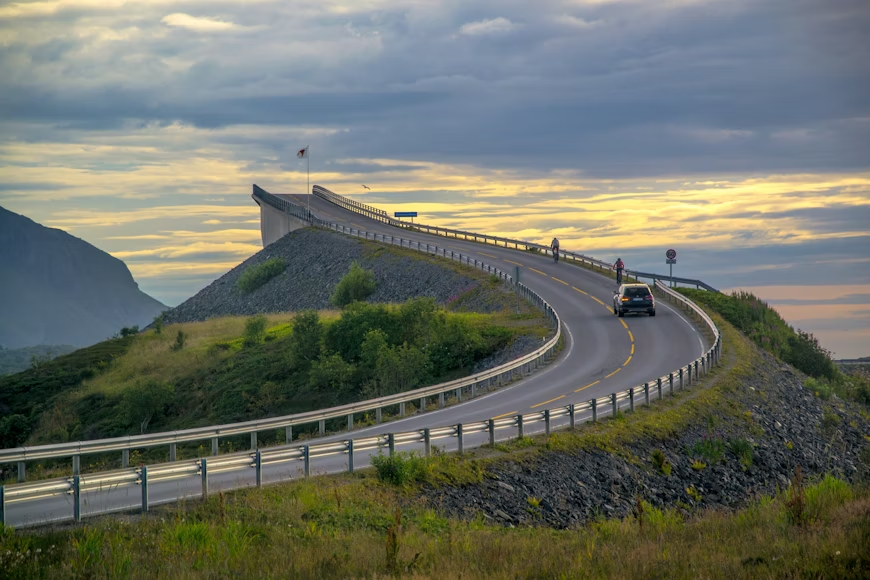
Imagine cruising along a straight road for an hour, surrounded by beautiful scenery on every side. That’s the kind of feeling a Norway road trip gives you.
Drive a little on the Norwegian roads, and the map opens into fjords that look painted, cliffs that drop where the ocean meets the land, and roads that were clearly built by people who cared deeply about spectacle. Long drives here are not just transit; they are the point perfectly connected with nature’s magic. But to make your trip shine, you need some good Norwegian roadtrip itineraries, with room for serendipity. So, let’s gather some ideas on what are the best things you should include in your travel plan to Norway.
Why a Road Trip Is the Perfect Way to Explore Norway
Norway does not do boring. Mountains appear right out of deep fjords, narrow roads follow cliffs, coastline is extended over thousands of islands. When you drive, you have the opportunity to control the speed. Stop where you want. Change plans on a whim. Pull over for a sunset on a quiet shore and come back the next day for a sunrise over a mountain lake.
There’s even research showing that your satisfaction as a self-drive tourist in Norway strongly depends on the quality of “roadside facilities”, such as well-placed viewpoints, rest stops, safe parking, and clear signs.
So a good itinerary isn’t just about picking famous roads, it’s about giving yourself the freedom to explore at your own rhythm.
Which Are the Most Scenic Drives in Norway You Shouldn’t Miss?
You’d start with three roads that keep popping up again and again, for good reason. Here are some drives every traveler must include in their Norwegian roadtrip itineraries:
| Road | What You’ll See | Why It’s Special |
| Atlantic Road (Atlanterhavsveien) | Small islands, curvy bridges, and waves of the Atlantic Ocean. | Feels like a movie scene, especially at sunset or when the wind blows. |
| Trollstigen + Geiranger Route | Sharp bends, tall waterfalls, and high mountains. | Exciting drive with amazing mountain views. |
| Lofoten Islands Route (E10) | Tall peaks, small fishing villages, beaches, and coastlines. | Beautiful and dramatic scenery, especially in summer or winter. |
| Sognefjellet Route | Mountain passes, glaciers, and wide views. | Perfect for high mountains and open nature. |
| Hardangervidda Route | Lakes, waterfalls, and big open plains. | Peaceful drive with lots of nature to enjoy. |
| Ryfylke Route | Fjords, bridges, and quiet villages. | A mix of mountains and coastlines, without too many crowds. |
How Many Days Should You Spend and What Pace Works Best?
If you try to cram too many places in a short time, you’ll spend most of your trip in the car. That’s not what Norway is about.
Here’s a simple way to pace yourself: treat each major region (coast, mountains, islands) as 3–5 days. Mix days of driving with days of staying, but staying where there’s time for waking up late, having coffee, walking around, lingering at viewpoints.
Let’s give you an example of a travel itineraries for Norway:
- Days 1–2: Explore the Coastal Islands and drive the Atlantic Road, watch the sun over the ocean.
- Days 3–5: Head inland, drive Trollstigen, spend a full day at the fjords, maybe cruise or kayak near the mountains.
- Days 6–9: Move north or west, take the Sognefjellet or Hardangervidda route, combining mountain roads, fjords, and nature.
- Day 10+: If you have time, push up to the islands and take the Lofoten route, or linger along quieter coastlines or small villages.
This way, you travel intentionally, not racing, but absorbing.
What to Pack into Your Top-Notch Norwegian Roadtrip Itineraries?
Even before you start punching pins into Google Maps, there are a few things worth keeping in mind to put in your Norway scenic roadtrip plan.
- Check season & road status as many mountain passes (Trollstigen, Sognefjellet) close in winter.
- Don’t overpack for both safety and comfort. Loose items can shift, especially on curvy roads.
- Plan for flexible rest stops. Norway’s scenic road program includes public rest areas, lookouts, and platforms. Great for stretching legs, grabbing a snack, and soaking in the view.
- Mix your transport style, don’t only drive. Combine driving with short hikes, boat rides, or ferry crossings. Especially near fjords or islands.
- Be weather-ready, even summer can be chilly or windy, especially on high roads or coasts.
A Sample 10-Day Itinerary: From Coast to Mountains to Islands
Let’s walk you through a sample Norwegian roadtrip itineraries route. You may tweak it as you please, but this gives a rough flow: Coast → mountains → islands:
- Arrive in Oslo → head west
From the south, begin with a coastal approach, aiming to connect to the western coastline and the sea.
- Coastal Drive & Atlantic Road
Cross beaches, small villages, the sea, and hit the Atlantic Road at sunset. Enjoy the bridges, waves, and salty air.
- Molde/Kristiansund – relax & explore
Taste local seafood, stroll through quiet harbours, and rest before heading inland.
- Drive inland toward the mountains – enter Trollstigen/Geiranger route
Watch the landscape change: fjords replacing islands, cliffs replacing beaches.
- Explore fjords & mountain valleys
Take boat rides, maybe short hikes, or just sit by a fjord watching water and mountains.
- Head to highland or plateau routes (Sognefjellet or Hardangervidda)
Snow-lined roads, high-altitude lakes, magical quiet.
- A day in a small mountain village/glacier valley/nature reserve
Optional hike, local food, rest, and read a book.
- Travel toward coastal islands/archipelagos
Make your way north or west, gradually shifting from mountains back toward the sea.
- Island Drive – Lofoten Route
Sharp mountains rising from the sea, small red fishing cabins, white-sand beaches, dramatic sky, and water contrast.
- Relax, soak it in, start returning, or continue exploring
Maybe stay a few days in a village, talk to locals, enjoy slow mornings – then head back.
What Research Insights Teaches Us About Planning
One such study carried out on self-drive tourists on the scenic road network (mountain roads and coastal routes) in Norway revealed that the roadside facilities and the quality of the route experience are highly important in determining your general satisfaction with the travel experience and even in determining whether or not you would desire to revisit the place.
What does that mean for you? When you build your travel itinerary for Norway, don’t just chase the “famous roads.” Prioritize having good stop-points, not rushing, allowing time for rest, viewpoints, and maybe even spontaneous detours.
That’s where the magic happens.
A Few Things to Keep in Mind (Because Travel in Norway Is Beautiful, but Wild Too)
You’re visiting a country of extremes, ocean storms, narrow mountain roads, and Sudden weather changes.
- Always check road conditions before you head out, especially in the mountains or islands. Some roads remain closed much of the year.
- Always drive carefully. On windy coastlines or narrow roads, a small mistake can be dangerous.
- Be weather-ready. Pack warm clothes even in summer. Wind, rain, and cold can come like surprises.
- Be respectful, as Norway is pristine; Don’t litter. Follow local rules for parking, camping, and hiking.
Parting Thoughts
Listen, there’s no single “perfect” plan among all Norwegian road trip itineraries. Just what works for you. Maybe you love beaches and want to linger by fjords. Maybe you love mountains and long drives. Maybe you love quiet villages and slow mornings.
Wherever you lean, Norway accommodates.
On the road, you’ll realize something. The journey becomes as important as the destination. Every time you pull over for a cliff-side view. Every time you watch waves crash under a bridge. Every time you catch a mountain sunrise or hear silence except for birds, you’ll thank yourself for choosing the car over a bus, for deciding to go off-beat instead of staying in a city.
So here’s to you, to the open road, the unknown turns, the calm fjords, the stormy seas, the mountain air. Pack light. Drive safely. And leave room for spontaneity.
Norway’s waiting.