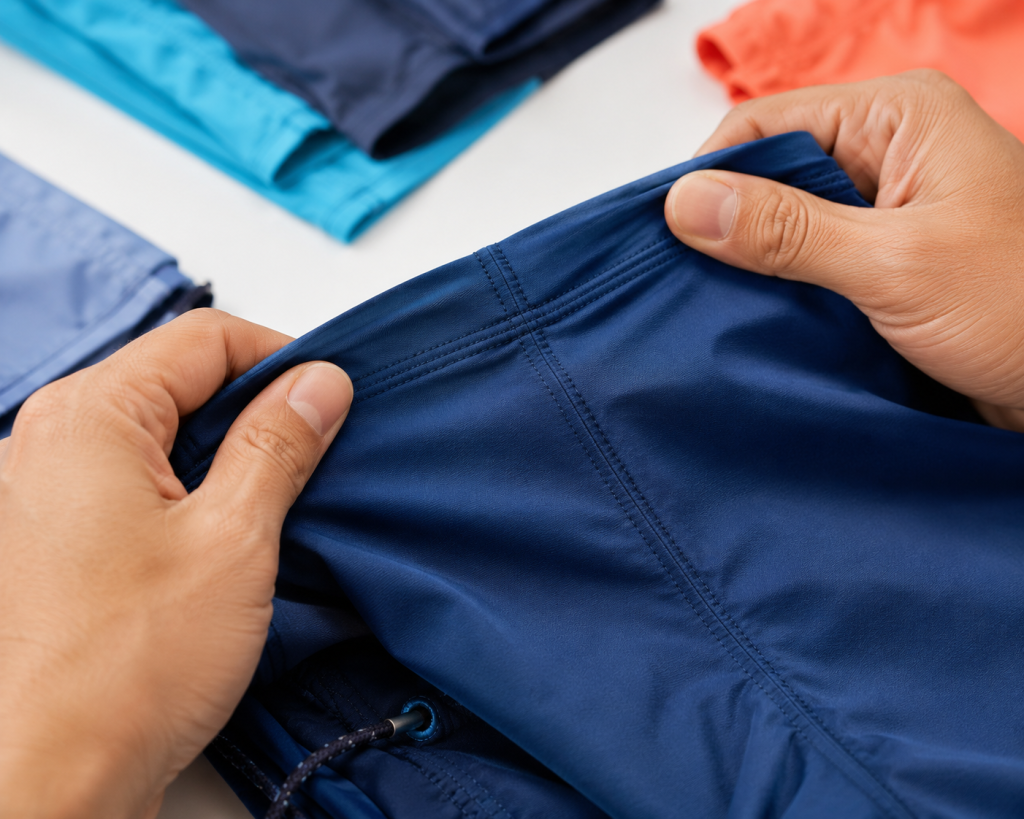
Anyone who’s placed a large wholesale order and then dealt with a wave of returns knows the feeling. The samples looked fine, the fabric felt decent enough on first touch, and then a few weeks after the product hits shelves or gets shipped to customers, the complaints start rolling in.
Seams splitting, colors fading after a couple of washes, drawstrings that snap the first time someone pulls them tight. Ordering bulk men swimwear is one of those categories where the difference between a good batch and a bad one isn’t always obvious until you know exactly what to check for.
Fabric Weight Tells You More Than You’d Think
Not all swim fabric is created equal, and weight is one of the easiest ways to gauge quality before committing to a large order. Lighter, thinner fabric might feel breathable in a showroom, but it often stretches out of shape fast and loses its structure after repeated exposure to chlorine or saltwater.
A slightly heavier fabric blend usually holds its shape better over time and resists the kind of sagging that makes swimwear look worn out after just a handful of wears. Ask suppliers directly about fabric weight and composition rather than relying on how it feels in a quick handshake sample.
Check the Stitching Under Stretch
One of the simplest tests that gets skipped constantly is stretching the fabric at the seams and actually watching what happens. Cheap stitching will show gaps or puckering almost immediately when pulled, while well-constructed seams hold their line even under tension. This matters even more for swim trunks with mesh lining or side pockets, since those areas see more stress from movement and are usually the first place a poorly made pair starts to fall apart.
Look Closely at the Drawstrings and Waistbands
It sounds like a small detail, but waistband construction is one of the most common failure points in men’s swimwear. A flimsy elastic band loses its stretch after a handful of wears, and drawstrings made from weak cord fray or snap under regular use.
Quality manufacturers reinforce the waistband stitching and use drawstrings that can handle repeated pulling without unraveling. This is one of the easiest things to physically test on a sample before placing a bulk order, so there’s no excuse for skipping it.
Ask About Colorfastness Testing
Fading is one of the most common complaints with lower-quality swimwear, especially with darker colors or bold prints. Chlorine and prolonged sun exposure are brutal on dye that hasn’t been properly set into the fabric.
Reputable manufacturers run colorfastness tests as a standard part of their quality process, checking how well a color holds up after repeated washing and exposure to pool chemicals. If a supplier can’t answer basic questions about how they test for fading, that’s usually a sign they haven’t prioritized it.
Quick-Dry Claims Need to Be Verified, Not Assumed
A lot of swimwear gets marketed as quick-dry, but the actual performance varies a lot depending on the fabric blend and finishing process. Some quick-dry claims are backed by real fabric technology, moisture-wicking weaves, specific polyester-spandex ratios, while others are just marketing language slapped onto a standard fabric.
Before ordering in bulk, it’s worth asking for the actual fabric spec sheet and, if possible, testing a sample by getting it wet and timing how long it actually takes to dry compared to a competitor’s product.
Consistency Across Sizes Matters as Much as Quality
Even genuinely well-made swimwear can create problems if the sizing isn’t consistent across a size run. A medium that fits noticeably different from one batch to the next leads to return headaches and unhappy customers, regardless of how good the fabric itself is.
Ask potential suppliers about their grading process and whether they maintain a master pattern across production runs. This is especially important for bulk orders, where inconsistency across even a small percentage of units can add up to a real cost problem.
Don’t Skip the Wear Test
Sample review often stops at visual inspection, but the more reliable test is actually wearing the product and moving around in it. Sitting, walking, stretching, even getting in water if that’s an option, reveals things a flat inspection never will.
Fabric that looks fine folded on a table can behave completely differently once it’s actually being worn and put under normal movement. Any manufacturer confident in their product should have no issue with a buyer taking the time to properly wear-test a sample before committing to a large order.
Pay Attention to Packaging and Labeling Standards Too
Quality control doesn’t stop at the garment itself. Proper care labels, accurate size tags, and consistent packaging all reflect a manufacturer’s overall attention to detail. A supplier that’s sloppy about labeling accuracy or packaging consistency often carries that same lack of attention into the actual garment construction. It’s a smaller detail, but it’s often a useful early indicator of how seriously a factory takes quality across the board.
Final Thoughts
Spotting quality before a bulk order comes down to testing things properly instead of trusting how a sample looks at first glance. Check the fabric weight, stress-test the seams, verify quick-dry claims, and make sure sizing stays consistent across the run.
The retailers and brands who take these extra steps seriously before placing a large order are the ones who avoid the expensive cycle of returns, refunds, and damaged reputation that comes from a batch of swimwear that looked fine in the sample room and fell apart everywhere else.