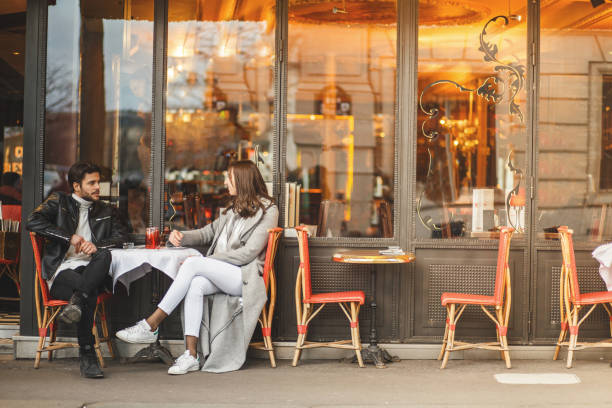
Some places quietly absorb stories. You sit down, order a drink, unfold a napkin, and suddenly something meaningful happens. Premium restaurant tables have a strange way of doing that. They are ordinary objects, wood, laminate, or metal, sometimes scratched or slightly uneven. Yet they end up holding first dates, last conversations, awkward reunions, business deals, apologies, celebrations, and moments people remember for years.
What makes a restaurant table such a powerful story setting is not the furniture itself, but what it enables. It creates a shared space. It slows people down. It forces eye contact. It gives hands something to do and silence somewhere to land.
That combination is rare, and writers, filmmakers, and everyday people instinctively know it.
A Table Creates Instant Intimacy
Sit across from someone at a restaurant table, and the world narrows. Phones might still be there, noise floats around, but the table draws a boundary. Everything important happens within that rectangle or circle.
This is why so many meaningful conversations start with, “We were sitting at this table when…” The table becomes the frame of the memory.
Unlike couches or bar counters, restaurant tables put people face-to-face. You see reactions in real time. You notice pauses, nervous gestures, small smiles, fingers tapping the edge. Those details are storytelling gold.
Even silence feels different at a table. It is shared. It is noticeable. It invites something to be said.
Neutral Ground Changes Behavior
One reason restaurant tables work so well as story settings is that they exist on neutral territory. No one owns the space. No one has home court advantage.
This changes how people speak.
At a restaurant table, conversations tend to be more honest, or at least more careful. People explain themselves more clearly. They listen longer. They choose words intentionally because the setting requires a specific social balance.
That is why important conversations often move out of homes and offices and into restaurants. Breakups, reconciliations, confessions, negotiations, they all feel safer on neutral ground.
From a storytelling perspective, this neutrality creates tension. Everyone is exposed, but no one is fully comfortable. That slight discomfort keeps the moment alive.
Tables Turn Time Into Chapters
Restaurant tables naturally break time into scenes. Ordering is the opening act. Waiting builds anticipation. Eating becomes the middle. Dessert or the check signals an ending.
This rhythm makes tables perfect for storytelling, because stories also move in beats.
Think about how often key moments happen between courses. A revelation drops just as the food arrives. A decision is made while pushing leftovers around the plate. An argument pauses when the server comes by.
The table does not rush the story. It gives it structure without announcing it.
That is why so many films and books return to restaurant scenes. The pacing is already built in.
Small Details Become Emotional Anchors
At a restaurant table, tiny details carry surprising weight.
A chipped corner.
A wobbly leg.
A candle dripping wax.
Condensation rings from glasses.
The sound of cutlery hitting a plate.
These details stick because they are witnessed during emotional moments. Years later, people might forget what was said, but they remember the table. They remember where they were sitting. They remember the scratch their thumb traced while waiting for an answer.
For storytellers, this is powerful. A table gives physical anchors to emotional events. It makes memories tangible.
This is also why real-life stories often return to the same restaurant. People revisit tables without realizing they are revisiting versions of themselves.
Restaurant Tables Invite Observation
Unlike private spaces, restaurants are full of other lives happening nearby. At a table, characters can observe and be observed.
Someone overhears a conversation.
A glance from another table changes the mood.
A couple argues quietly while strangers eat inches away.
This layered environment adds depth to any story. The main conversation might be intimate, but the surrounding noise reminds us that the world keeps moving.
From a narrative perspective, restaurant tables allow parallel stories to exist in the background. They create contrast, humor, discomfort, or irony without extra explanation.
A joyful announcement next to a table where someone is clearly unhappy. A breakup is unfolding while a birthday song plays nearby. These moments feel real because they are real.
Why Writers Keep Coming Back to Tables
There is a reason restaurant tables recur in storytelling across cultures and eras. They compress human experience into a manageable space.
At a table, people cannot easily walk away. They are seated, invested, waiting. That physical commitment mirrors emotional commitment.
Writers love that.
So do audiences.
A restaurant table signals that something is about to happen. It might be quiet. It might be explosive. But it will matter.
What Makes a Table Scene Work
Not every table scene lands. The strongest ones share a few quiet traits.
- The conversation has stakes, even if they are small.
- The table forces proximity or eye contact.
- The setting contrasts with the emotion: a calm place, an intense moment.
- Something interrupts: a server, food, noise, or timing.
- The table becomes part of the memory, not just the background.
When these elements come together, the table stops being furniture and starts being a stage.
Everyday Stories Count Too
This power is not limited to fiction. Real life uses restaurant tables the same way.
Friendships deepen over shared meals.
Families reconnect across scratched surfaces.
Strangers become something more over coffee.
Most people can name a restaurant table where something changed for them, even if they never thought of it as a story setting.
That is the quiet magic. Restaurant tables do not demand attention. They simply hold space until something human happens.
Where Stories Sit and Stay
Ultimately, restaurant tables matter because they slow people down just enough to let the truth surface. They create boundaries without walls. They invite conversation without pressure. They witness moments without judgment.
Stories need places like that.
A table does not speak, but it listens. It absorbs laughter, tension, disappointment, and hope. It keeps secrets long after the plates are cleared.
That is why restaurant tables remain among the most powerful, understated settings for storytelling. Not because they are dramatic, but because they are familiar.
And familiarity is where the most believable stories begin.